
Behaviour & Communication
Behaviour tells us something. The first step is learning how to listen.
Dogs communicate through far more than barking, growling or obvious body language.
Changes in movement, posture, distance, facial expression, activity, attention and behaviour can all give us information about what a dog may be experiencing.
This section of the Movement Library explores behaviour with curiosity rather than judgement, helping us look beyond what a dog is doing and begin asking why.
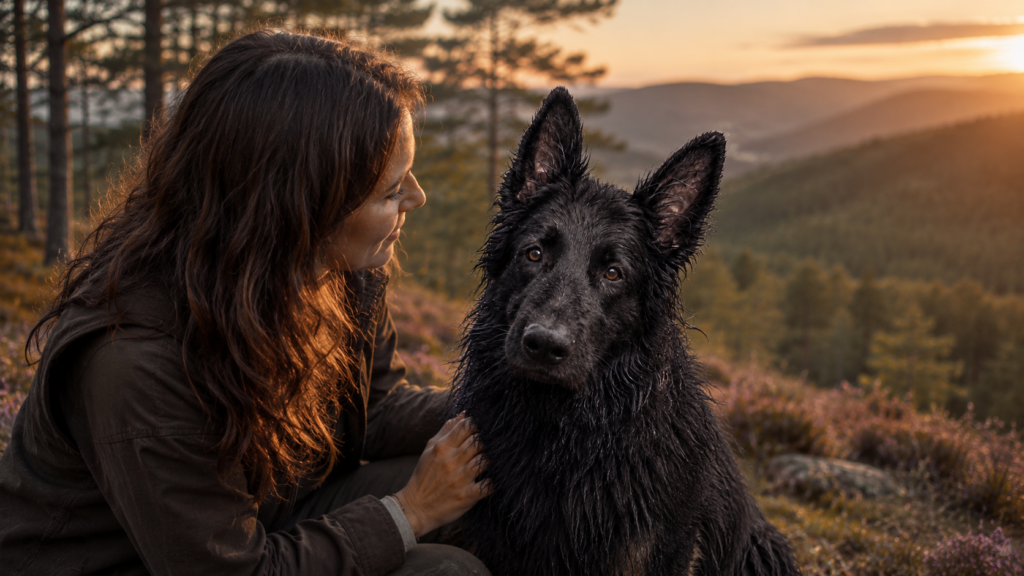
Behaviour Is Communication
Behaviour does not happen in isolation.
A dog may bark because they are worried, excited, frustrated, uncertain, seeking distance, responding to their environment or trying to communicate a need.
Two dogs can show behaviour that looks almost identical while experiencing something completely different.
This is why Seeing Dogs Differently encourages us to look beyond the behaviour itself.
Instead of only asking:
“How do I stop this?”
we can also ask:
“What might this behaviour be telling me?”
Look at the Context
To understand behaviour, we need to look at the circumstances surrounding it.
Consider:
- What happened immediately before the behaviour?
- Where was the dog?
- Who or what was nearby?
- Had something similar happened earlier?
- Was the dog tired, worried, excited or physically uncomfortable?
- Did the dog have the opportunity to move away?
- What happened after the behaviour?
- Is this part of a wider pattern?
Context helps turn isolated behaviour into useful information.
Communication Can Be Subtle
Dogs often communicate long before behaviour becomes obvious.
We may notice:
- Turning the head away
- Looking away
- Slowing down
- Becoming very still
- Moving away
- Lip licking
- Yawning
- Changes in ear position
- Changes in facial tension
- Shifting body weight
- Seeking proximity
- Increasing distance
- Changes in breathing or movement
Learning to notice these quieter signals can help us respond before a dog feels the need to communicate more strongly.
Explore Behaviour & Communication Resources
This area of the Movement Library will continue to grow with practical resources designed to help you understand behaviour, communication and context more deeply.
You’ll find resources exploring topics such as:
- Growling and other forms of communication
- Barking and vocal behaviour
- Canine body language
- Thresholds
- Trigger stacking
- Behaviour patterns
- Reflection and observation
- Understanding what may be happening beneath the behaviour
As new guides, worksheets and learning resources are added, they will be linked here.
Explore the Framework
Seeing Dogs Differently also has a dedicated framework for looking at behaviour and communication within the wider picture.
A Different Question
Understanding behaviour does not mean excusing everything a dog does.
Safety, boundaries and appropriate support still matter.
The difference is that we respond with more information.
Instead of seeing behaviour simply as a problem to eliminate, we can begin to see it as part of a conversation.
Behaviour gives us information.
Our job is to learn how to listen.