Body Language
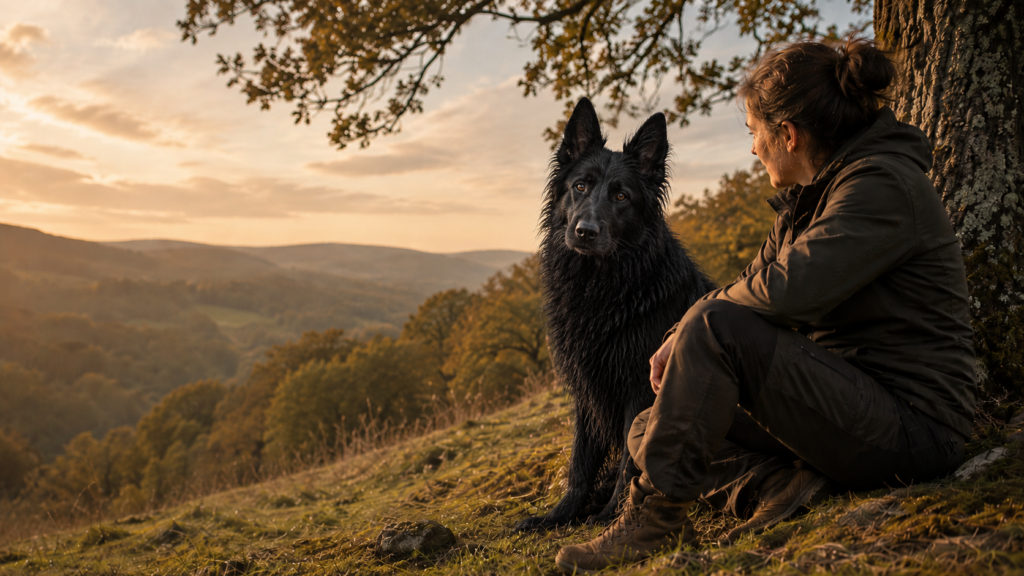
Dogs are communicating all the time, often long before they bark, growl or move away.
Body language helps us understand how a dog may be responding to what is happening around them.
But communication is rarely about one signal in isolation.
We need to look at the whole dog, the situation and changes over time.
Look at the Whole Dog
Rather than focusing on a single body part, observe:
- Eyes
- Ears
- Mouth
- Facial muscles
- Head position
- Tail
- Body posture
- Weight distribution
- Movement
- Speed
- Distance
- Breathing
- Orientation towards or away from something
The relationship between these signals often tells us more than one signal alone.
Context Changes Meaning
A wagging tail does not automatically mean a happy dog.
Yawning does not always mean stress.
Panting does not always mean anxiety.
Looking away does not always mean avoidance.
Signals gain meaning when we consider:
- What is happening
- What happened before
- The dog’s usual behaviour
- The wider body posture
- Changes in movement
- The environment
- The dog’s options
Body language should be interpreted as a picture rather than a dictionary.
Notice Changes
Sometimes the most useful information is not the behaviour itself but the change.
A loose dog becoming still.
A dog moving freely suddenly slowing down.
A relaxed face becoming tense.
A dog who was approaching beginning to turn away.
These changes can tell us that something about the dog’s experience has shifted.
Give Communication Meaning
When dogs communicate discomfort and we respond appropriately, we teach them that communication works.
That might mean:
- Increasing distance
- Pausing an interaction
- Giving the dog more time
- Changing how we approach
- Reducing handling
- Allowing the dog to move away
- Adjusting the environment
Listening to quieter communication can reduce the need for dogs to communicate more strongly.
Explore Body Language Resources
This area of the Movement Library will continue to grow with practical resources designed to help you notice, understand and interpret canine body language within the wider context.
You’ll find resources exploring topics such as:
- Canine body language and communication
- Facial expression and posture
- Movement and changes in body tension
- Lip licking, yawning and other subtle signals
- Growling and stronger communication
- Thresholds and changes in coping
- Observation and reflection
- Looking at the whole dog rather than individual signals in isolation
As new guides, quick references, worksheets and learning resources are added, they will be linked here.
Observe Before You Interpret
Body language is not about memorising a list of signals and deciding exactly what a dog feels.
It is about becoming a better observer.
Notice.
Pause.
Consider the context.
Look at the whole dog.
Then ask what the communication might be telling you.